

Share This Article
This article was originally posted on April 29, 2026 on the League of California Cities here.
I have always reflected on and described my 27 years of service to my community and state — 23 in elected office — as the greatest joy and honor of my life. Over the last 17 years, I have had the pleasure of teaching what I learned and know to the next generation of leaders at the University of Southern California Sol Price School of Public Policy.
I always explain to my students that those of us elected to positions of power carry a profound responsibility to remain disciplined and resist corruption. Sadly, corruption in our public lives takes different shapes but always scales with power. Even the limited authority of a small city council member can begin to influence behavior. I have often said that a little power corrupts a little, and a lot of power corrupts a lot. Lord Acton said more eloquently and famously, “Power tends to corrupt, and absolute power corrupts absolutely.”
With greater authority often comes a sense of entitlement, arrogance, and reduced transparency and accountability: the antithesis of good governance. With partisanship, political discourse, and a media solely interested in controversy, our political leaders and executives have found fewer people willing to challenge them. Or at least challenge them only on the basis of politically motivated alignment rather than the underlying corruption. Over time, this lack of proper resistance leads these individuals to even justify unethical actions. Unchecked power makes corruption feel normal and even necessary to retain power and control.
Those of us who ask and earn the votes of the people to exercise “reasonable power to govern” carry a profound responsibility to remain disciplined and resist all shapes of corruption. Unlike elected authority — which is earned in our democracy — power is taken. I often remind my colleagues in public office of the preamble of the Brown Act in California, “Public commissions, boards, councils, and other legislative bodies of local government agencies exist to aid in the conduct of the people’s business. The people do not yield their sovereignty to the bodies that serve them. The people insist on remaining informed to retain control over the legislative bodies they have created.”
Without discipline, even well-intentioned officials can begin to prioritize personal gain, political advantage, or loyalty to allies over the public’s needs and interests. The temptation to misuse power grows as influence and power increase, which is why strong moral character and clear boundaries are essential to serve in public office.
I warn my colleagues in public office that broader trends suggest we are sadly witnessing a degradation of the public service many of us value and cherish. Scandals involving the misuse of campaign funds, sexism, racism, and misogyny illustrate how public trust can be weakened. This trend supports the thesis that corruption does not appear suddenly but develops over time, growing alongside power when discipline and accountability purposefully weaken. I have called this accumulated power effect “it will not happen to me” syndrome. If public service continues to degrade in this way, it risks undermining the very foundation of democratic systems, where trust and integrity are essential.
I conclude, as I wrote in my previous article about “ The Value of Public Service” for Western City magazine: Public service is not about power or collecting a paycheck from the government. Helping or serving our communities and the people who elect us is an activity beyond self-interest. Recognizing this solemn responsibility is essential to preserving public trust, protecting our institutions, and ensuring that power serves only to advance service rather than corruption.
The opinions expressed in this article are those of the author and do not necessarily reflect the views or positions of the League of California Cities or its members. Are you interested in submitting an op-ed on an issue important to city leaders? Send a short pitch to [email protected].
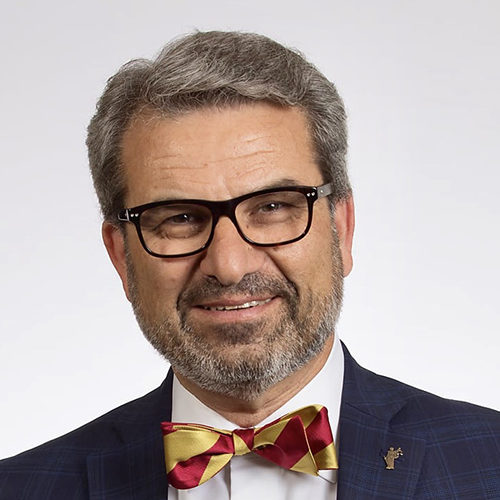
Frank V. Zerunyan is a Professor of the Practice of Governance at the University of Southern California (USC) Sol Price School of Public Policy (USC Price) and Director of Executive Education. He is the founding director of the USC Price Center on National Defense and Public Safety. Professor Zerunyan oversees USC’s Reserve Officers’ Training Corps (ROTC) as the Director and University Liaison for the U.S. Air Force, Army, Naval Reserves ROTC, and Nautical Science Programs.
Professor Zerunyan’s principal areas of expertise include governance, public-private partnerships, civic and ethical leadership, land use, medical regulation, negotiation, and executive education. He lectures locally and globally to build capacity and foster leadership among public executives worldwide. He is the author of books, book chapters, and many short articles published nationally, internationally, and on USC Price’s “Faculty Perspectives.” Professor Zerunyan is often quoted in the media and is a USC resource for journalists as an expert in governance and leadership. He is also an expert on public administration at the United Nations Innovation Branch (formerly Capacity Building Branch).
For his influential advisory role in the Republic of Armenia, he was awarded LL.D. Doctor of Laws – Honoris Causa by the Public Administration Academy of the Republic of Armenia. Professor Zerunyan designs curricula and teaches at the American University in Armenia, Yerevan State University, and the Vazgen Sargsyan Military University in Armenia, with an honorary rank of colonel. He also teaches for the U.S. Navy at the U.S. Naval Service Training Command.
Professor Zerunyan serves on the editorial boards of the Public Administration Scientific Journal for the Republic of Armenia and the Ukrainian Law Review. He is on the board of councilors of Anahuac University Law School, Xalapa, Mexico (Consejo Consultivo de la Escuela de Derecho).
Professor Zerunyan earned his Doctor of Jurisprudence (Doctor of Laws) degree from Western State University College of Law and his Bachelor of Arts degree from California State University, Long Beach. He also completed his advanced legal education in Corporate Taxation at the University of Southern California Law Center (USC Gould). He is a graduate of the California League of Cities’ Civic Leadership Institute.
Professor Zerunyan, trained and practiced as a lawyer, is a four-term Mayor and Councilmember in the City of Rolling Hills Estates, California. He serves on several city, county, and regional policy boards and committees. He was also a gubernatorial appointee under Governor Schwarzenegger, serving 38 million medical consumers on the Medical Board of California.